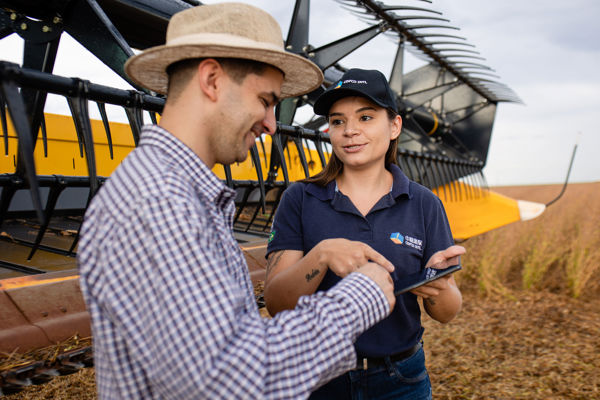
Capacity building
Building supplier capacity
Collaborating with suppliers, particularly farmers, is fundamental to meeting global agricultural demand sustainably, helping to address shared challenges and promote food security. We prioritise long-term relationships, building farmer capacity to adopt more responsible and sustainable practices. We take a risk-based approach to developing targeted supplier improvement efforts, partnering with farmers, producers and suppliers to raise standards and improve livelihoods, while ensuring a steady supply of products for our business. We also participate in industry initiatives and certification schemes. In this way, we strengthen our long-term partnerships, while helping to improve farmer livelihoods by raising yields and expanding their access to global markets.
Our Supplier Code of Conduct outlines the standards of social and environmental responsibility we require from our suppliers. We expect every supplier to uphold these principles and ensure that their own suppliers and all parties further the way up the chain adhere to the same requirements. Our Code is supported by Sustainable Corn, Soy and Palm Oil Sourcing Policies covering challenges including climate change, deforestation- and conversion-free production and human rights due diligence.
Case studies

Collaborating with soy farmers in the Cerrado to promote sustainable agriculture
As part of our commitment to the Agricultural Sector Roadmap to 1.5°C, we are helping to achieve deforestation and conversion-free soy supply chains by supporting soy farmers in high risk areas of the Brazilian Cerrado to better manage and conserve their land. Through the Soft Commodities Forum’s (SCF) Farmer First Clusters (FFC) initiative, COFCO International is working with Produzindo Certo to provide farmers with technical assistance and support with the Brazil Forest Code compliance, in return for a commitment to supplying deforestation and conversion-free soy. In this way, farmers are making strides towards sustainability certification schemes.
Collaborating with soy farmers in the Cerrado to promote sustainable agriculture In its first year, the FFC project has engaged 223 farms across 665,840 hectares, restored 178 hectares of land and prevented the emission of 1.3 gigatonnes of CO2. The SCF has also partnered with the Consumer Goods Forum’s Forest Positive Coalition of Action to scale the project, launching the Sustainable Landscapes Partnership. Looking ahead, we will continue to work with the FFC initiative to ensure it brings value to farmers and farming communities

Building sugarcane supplier capacity in Brazil
Our ‘Sustainable COFCO Producer’ programme for external sugarcane producers seeks to help improve their sustainability performance. This programme was built on an initial understanding of their cultivation practices, including the extent to which sugarcane planting is integrated with other crops or animal rearing activities, and includes evaluation, training and recognition of suppliers, focussing on labour conditions, resource management, biodiversity and environmental protection. As part of the programme, we work with suppliers to assess impacts on forests and biodiversity (including whether they have registered their farm with the Brazilian government for conservation purposes), respect for human rights and climate resilience measures. We also analyse their use of innovative technologies, practices and machinery, and investment in the research and development of more sustainable agricultural solutions. Overall, the project allowed us to identify risks related to sugarcane supplier operations and develop a supplier engagement programme focused on assessing issues such as human rights, biodiversity, climate change, and governance.