Sustainable livelihoods
We aim to promote economic inclusion and support sustainable livelihoods where we operate, particularly among farmers and rural communities, in line with the UN Sustainable Development Goals, creating a significant, measurable and lasting impact, particularly among vulnerable groups. This also strengthens our contribution to global food security, while empowering our suppliers to access international markets.
We are committed to supporting communities directly or indirectly affected by our business, respecting their economic, social and cultural rights, such as adequate housing, food, water and sanitation. We strive to ensure that any rights to land tenure are upheld and communities are kept safe.
Our Community Investment Policy governs our investment in communities affected by our operations. We also aim to promote the economic inclusion of smallholder farmers. We invest in building the capacity of rural farmers and young adults to learn new skills and access employment in agriculture. Beyond this, we participate in community projects to promote self-sufficient food production.
Case studies

Improving child nutrition in India
Supporting child nutrition in India In Punjab and Haryana, India, children often lack access to sufficient nutritious food. In 2024, we partnered with non-profit organisations including HarvestPlus to launch a groundbreaking programme designed to reach 15,000 children in 60 schools by improving their access to locally grown, nutritious foods. In particular, the addition of Iron Pearl Millet and Zinc Wheat help to address micronutrient deficiencies, containing essential nutrients to boost children’s health and development. Through the ‘Building Nutri Patshalas’ project, we aim to help improve wellbeing among local communities and empower community members to reach more children, while promoting economic inclusion.

Empowering smallholder farmers in Brazil
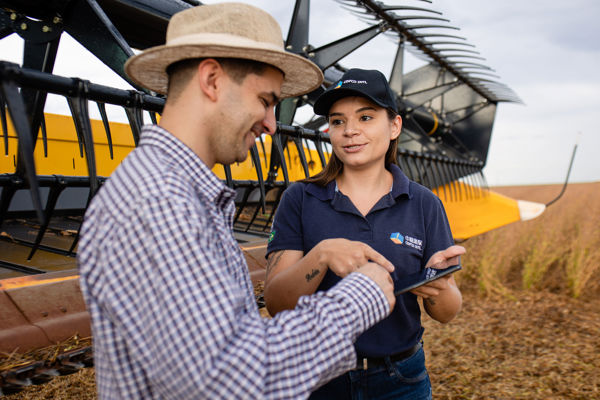
In Brazil, we support the country’s Social Fuel Stamp Programme, which seeks to empower some 41,000 smallholder soy farmers to access markets. The initiative, organised by the Brazilian Ministry of Agriculture, Livestock and Supply, provides agri-businesses with an incentive for purchasing biodiesel and feedstock from organisations that promote fair prices and provide training for smallholders to produce oilseeds in a safe and sustainable way. In 2024, we sourced 184,000 tonnes of soybean through this programme, compared to 213,000 tonnes in 2023. In this way, the soybean farmers were able to raise their yields and improve their livelihoods. Through this programme, we also sourced 255 tonnes of raw cotton and continued to source coconut (16,000 tonnes) from over 356 and 1,900 smallholder producers in the Northwest region, respectively, positively impacting local economies.

Building the capacity of farmers to diversify their production
In South Africa, we support the Buhle Farmers’ Academy, providing training and support to 50 smallholders for the local production of livestock, vegetables, poultry and eggs. We also offer training on sustainable farming and farmer business development, with participants able to apply their acquired knowledge within their home communities.